



NETWORK
AS17433 · APAC BACKBONE

Our network

Hytron operates the AS17433 APAC backbone. Across our three locations, it connects to 6 upstream carriers and 4 IX platforms (BBIX / JPNAP / EIE / SGIX). Local facilities, capacities and connectivity are listed below, with routes available through Looking Glass.

Hytron Network Services Limited
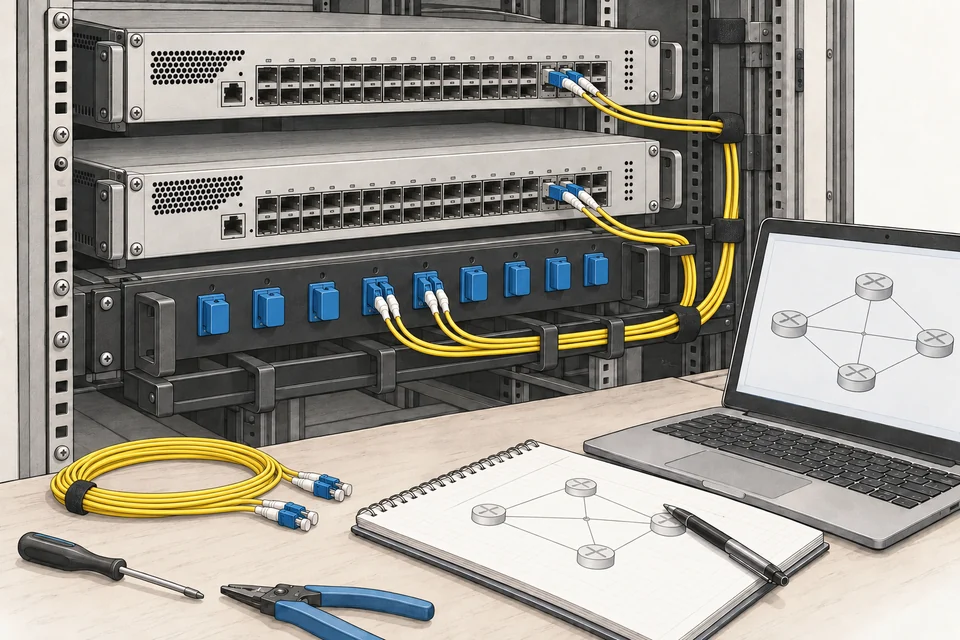
Illustrated rack-mounted switches, duplex LC fibre patching and a network engineering workbenchTechnical illustration · not a company equipment photo
NETWORK
ASNAS17433
Backbone upstreams6
IX4 · BBIX / JPNAP / EIE / SGIX
Total capacity2.2 TBPS
RPKIROV ENABLED

Internet exchanges · EIE / Equinix · by location

Interconnection

Network interconnection

Our APAC backbone connects to 6 upstream providers and 4 IXs, with customer cross-connects and PNI linking external networks and customer equipment.

AS17433

Upstream connectivity

IP TRANSIT

These providers serve our APAC backbone. Upstreams are configured by location, with BGP used to select routes.

  • AS3491PCCW Global
  • AS174Cogent
  • AS6453Tata Communications
  • AS137409GSL Networks
  • AS3356Lumen (CenturyLink)
  • AS2914NTT

IX peering

Internet exchanges connect participating networks for the exchange of routes and traffic.

  • BBIX
  • JPNAP
  • EIE
  • SGIX

Customer XC

Cross-Connect links connect customer equipment and networks within facilities for service delivery or interconnection.

PNI · Private peering

Dedicated private interconnects exchange traffic directly with the following networks.

AS17433 / PEERING

Networks we connect with

The bgp.tools Peers table records 490 ASes. Logos are grouped by network brand, with every observed ASN listed below.

bgp.tools

Peers are public BGP adjacency observations, including 8 upstreams, 76 downstreams and Hytron ASes. These labels overlap the same list; connections may use an IX or a dedicated link.

Observed

All observed ASes

490 / 490

The list preserves source order and names, including ASes without a verified brand logo. IPv4 / IPv6 labels indicate path visibility at the observation time.

Capabilities

Network capabilities

Routing controls, traffic monitoring and connectivity tools help your team understand and manage the network.

Technical illustration of IPv4 and IPv6 dual-stack connectivity and route checks.

Dual-stack routing

IPv4 · IPv6

Full IPv4 + IPv6, regional policy, connectivity testing.

Check routing, connectivity and paths separately for IPv4 and IPv6. For multi-region deployments, compare reachability by address family to investigate connectivity issues affecting one protocol.

Technical illustration of BGP announcements, route policy and traffic-filtering planning.

Full BGP control

BGP · COMMUNITY

Community, MED, LOCAL_PREF, prepend, Flowspec, blackhole.

Use communities, LOCAL_PREF, MED and AS-path prepending to shape announcements and route preferences for primary and backup links or planned maintenance. FlowSpec distributes filters based on packet characteristics; blackholing drops all traffic to a selected prefix to help isolate an attack target.

Technical illustration of RPKI origin validation, IRR filtering and route checks.

Route security

RPKI · IRR · MANRS

RPKI ROV, IRR filtering, max-prefix, MANRS-compliant.

RPKI ROV checks the origin ASN’s authorization to announce the prefix and its prefix length. IRR data informs prefix and ASN filters, while max-prefix sets a route-count limit for a BGP neighbor.

Technical illustration of equal-cost multipath traffic distribution and BFD connectivity checks.

ECMP / BFD

ECMP · BFD

Multi-path load distribution, 50ms BFD failure detection.

ECMP distributes traffic across equal-cost paths. BFD monitors forwarding-path connectivity and signals failures to routing protocols so they can take the appropriate routing action.

Technical illustration of APAC backbone fibre links and regional route planning.

Low-latency backbone

100G DARK FIBRE

HK ↔ NRT 51ms, HK ↔ SIN 41ms via dark fibre.

100G dark fibre carries the APAC backbone links. Use the inter-node latency figures and paths to destination networks when planning regional traffic and backup routes.

Technical illustration of BGP path and traceroute inspection with a routing query tool.

Looking Glass

route.hytron.io

Real-time routing table, traceroute, BGP path queries.

Query BGP routes and AS paths, then use traceroute to inspect forwarding paths from the Hytron network. Compare destination paths before deployment or investigate reachability and latency during an incident.

Open Looking Glass
Latency

Connections between locations

Compare P50 / P99 latency references between locations, with projected Taipei figures shown separately. Use Looking Glass for current test results.

FIG.13 / LATENCY MATRIX
Latency referenceP50 / P99 · ms
Inter-node latency references. Each cell lists P50 and P99 in milliseconds. TPE is projected for 2026.
From / toHKGNRTSINTPE*
HKG—P50 51msP99 53P50 41msP99 43P50 6msP99 8
NRTP50 51msP99 53—P50 74msP99 77P50 57msP99 60
SINP50 41msP99 43P50 74msP99 77—P50 47msP99 50

TPE*: Projected 2026. Values in this column are planning references.

Node capacity

HKG
1.2 Tbps
NRT
600 Gbps
SIN
400 Gbps

For current results, use Looking Glass

Route table

Routing tables & queries

Review how prefixes, AS_PATH, LOCAL_PREF and MED appear in a routing table. Use Looking Glass to query current BGP routes and forwarding paths.

FIG.14 / RIB SNAPSHOT
AS17433 / BGPBGP routing table
Routing table example
Total routes
942,318
IPv4
837,142
IPv6
105,176
Own prefixes
24
RPKI valid
94.2%
Eight example routes with prefix, AS path, LOCAL_PREF, MED, age and state.
PrefixAS_PATHLOCAL_PREFMEDAgeState
192.0.2.0/2417433 6453 i100047d*>
198.51.100.0/2417433 3491 174 i905012d*>
203.0.113.0/2417433 3356 i100060d*>
2001:db8::/3217433 6453 i100034d*>
2001:db8:1::/4817433 137409 i802008d*>
10.0.0.0/817433 ?100090d*>
172.16.0.0/1217433 24115 174 i7010003h*>
192.168.0.0/1617433 3491 i903018d*>
  1. Prefix192.0.2.0/24
    AS_PATH
    17433 6453 i
    LOCAL_PREF
    100
    MED
    0
    Age
    47d
    State
    *>
  2. Prefix198.51.100.0/24
    AS_PATH
    17433 3491 174 i
    LOCAL_PREF
    90
    MED
    50
    Age
    12d
    State
    *>
  3. Prefix203.0.113.0/24
    AS_PATH
    17433 3356 i
    LOCAL_PREF
    100
    MED
    0
    Age
    60d
    State
    *>
  4. Prefix2001:db8::/32
    AS_PATH
    17433 6453 i
    LOCAL_PREF
    100
    MED
    0
    Age
    34d
    State
    *>
  5. Prefix2001:db8:1::/48
    AS_PATH
    17433 137409 i
    LOCAL_PREF
    80
    MED
    20
    Age
    08d
    State
    *>
  6. Prefix10.0.0.0/8
    AS_PATH
    17433 ?
    LOCAL_PREF
    100
    MED
    0
    Age
    90d
    State
    *>
  7. Prefix172.16.0.0/12
    AS_PATH
    17433 24115 174 i
    LOCAL_PREF
    70
    MED
    100
    Age
    03h
    State
    *>
  8. Prefix192.168.0.0/16
    AS_PATH
    17433 3491 i
    LOCAL_PREF
    90
    MED
    30
    Age
    18d
    State
    *>
i
IGP
?
Incomplete
*>
Best path

Documentation and private prefixes illustrate the routing table format. These are example records, not live routing data.

Pops

Our locations

Line illustration of Hong Kong harbour and city landmarks.
HKGLIVE

Hong Kong

Hong Kong

Facility
Equinix HK2
Location
Tsuen Wan
Capacity
1.2 Tbps

The Hong Kong backbone is at Equinix HK2 in Tsuen Wan, with the compute cluster separately located at HKBN WPC. Network and compute have distinct locations for planning Hong Kong connectivity, colocation and regional deployments.

Upstream networks

  • Lumen
  • TATA
  • GSL
  • Cogent
  • PCCWG

Internet exchanges

  • BBIX
  • EIE
Line illustration of the Tokyo skyline and city landmarks.
NRTLIVE

Japan

Tokyo

Facility
Equinix TY8
Location
Inzai
Capacity
600 Gbps

The Japan PoP is at Equinix TY8 in Inzai. For IP Transit, colocation or regional connectivity in Japan, review the four local upstreams and JPNAP / BBIX connectivity, then check routes to the destination network.

Upstream networks

  • GSL
  • Lumen
  • TATA
  • Cogent

Internet exchanges

  • JPNAP
  • BBIX
Line illustration of Singapore bay and city landmarks.
SINLIVE

Singapore

Singapore

Facility
Equinix SG1
Location
Ayer Rajah
Capacity
400 Gbps

The Singapore PoP is at Equinix SG1 in Ayer Rajah, providing a network location for Southeast Asian deployments. Four local upstreams and three IX platforms help inform destination connectivity and regional traffic planning.

Upstream networks

  • GSL
  • Lumen
  • Cogent
  • NTT

Internet exchanges

  • SGIX
  • BBIX
  • EIE

Landmarks illustrate each region; facility details identify the actual PoP locations.

Line illustration of the Taipei skyline and city landmarks.
TPE · 2026PLANNED

Taipei

Our Taipei engineers work with Tokyo on operations. The Taipei network PoP remains planned; facility and connectivity details have not been announced.

AS17433 / DOWNSTREAM NETWORKS

Networks connected to AS17433

bgp.tools records 75 direct downstream ASes. The complete list appears below.

Observed · bgp.tools ↗Inferred from public AS paths; visibility varies over time and between IPv4 / IPv6.

Tools

Network tools